City of St. Louis Mayor Tishaura Jones recently signed an amendment to the 2018 International Fire Code, adopted by the city, stating all fire and smoke damper inspections in commercial buildings must be completed by a technician accredited by the ANSI National Accreditation Board (ANAB) ISO-IEC 17024. ANAB ISO-IEC 17024 accreditation means a technician meets the highest standards in the industry, and the new wording clarifies qualifications of fire and smoke damper inspectors. The amendment took effect June 6.
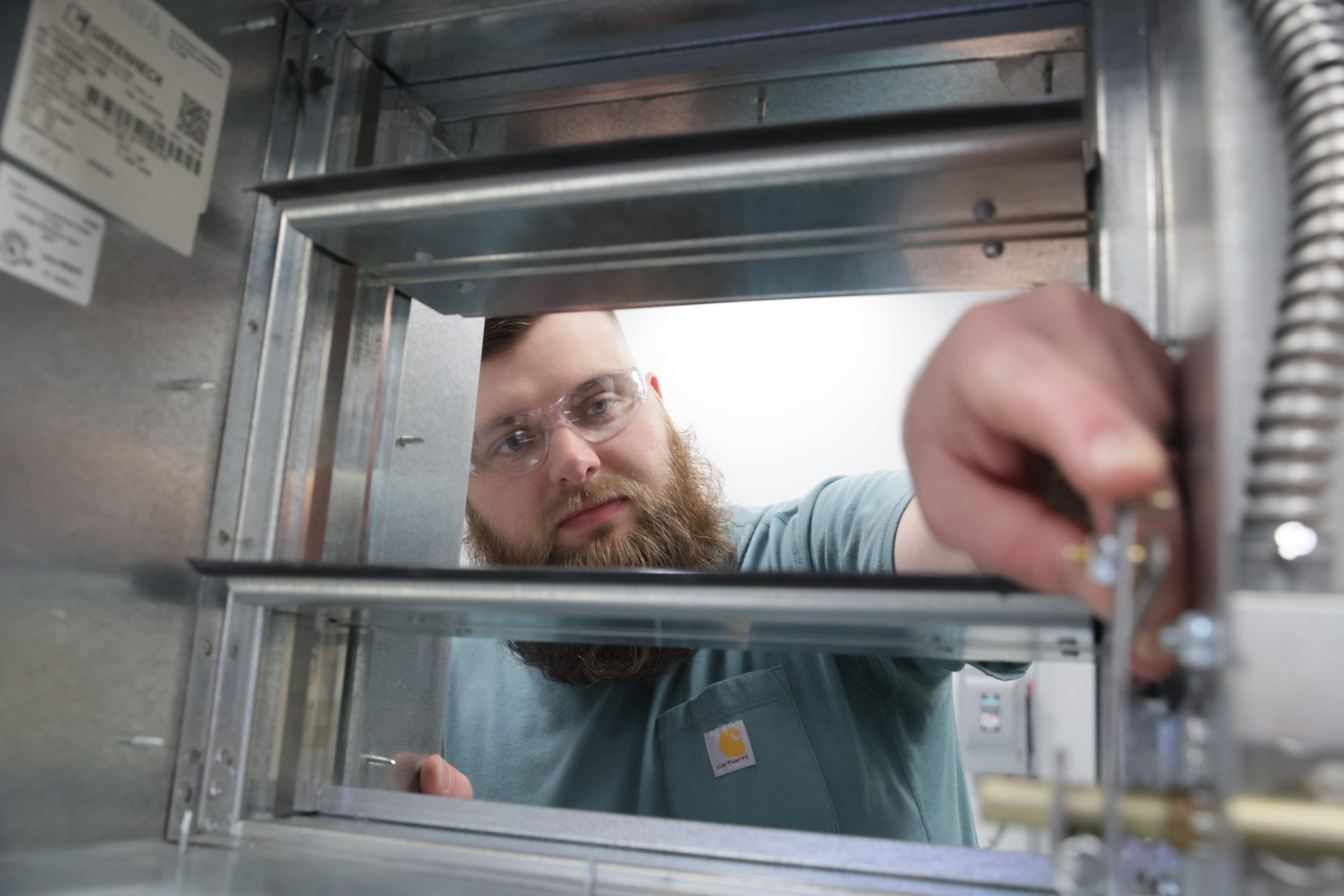
The passage of the amendment was a project the International Association of Sheet Metal, Air, Rail and Transportation (SMART) workers Local 36 in St. Louis worked for a handful of years to attain. The amendment assures fire and smoke dampers — devices installed in a ventilation system to keep smoke and fire from spreading throughout a building via the HVAC system — are inspected by properly certified inspectors who have passed the course and correlating certification exam by the International Certification Board (ICB). Many fire and smoke dampers are ignored due to lack of knowledge or, in some cases, a technical malfunction that reports a damper is working correctly when it is not. Since sheet metal workers design, create and install ventilation systems, it made sense for their certified members to inspect the dampers as well.
“A Fire/Smoke Damper certification from the ICB is a very difficult certification to get, and the certifications provided by the ICB meet the standards that ANAB recommends,” said Jake West, director of marketing for Local 36. “We were 90% of the way there. We just wanted to define who that qualified person would be. That was our main goal.”
The ANAB accreditation reaches beyond the city lines of St. Louis, said Vince Alvarado, director of implementation for the National Energy Management Institute (NEMI), which helped Local 36 draft language and host training sessions for fire professionals, as well as providing subject matter expert opinion.
“With the ANAB certifications, your training is the same throughout the country. It doesn’t change from state to state, and it holds people doing these inspections to the highest standards everywhere,” he said.
While fire life safety legislation has been passed in cities, counties and states nationwide over the last decade, this was the first time an amendment to the fire code was the chosen route to ensure fire and smoke dampers remain operational and safe.
“For St. Louis, it was better to try and amend the fire code. It works best for them,” Alvarado said. “What works in New Mexico doesn’t work in Missouri or California. We needed to strengthen the codes and ensure their enforcement, and this solution achieves that.”
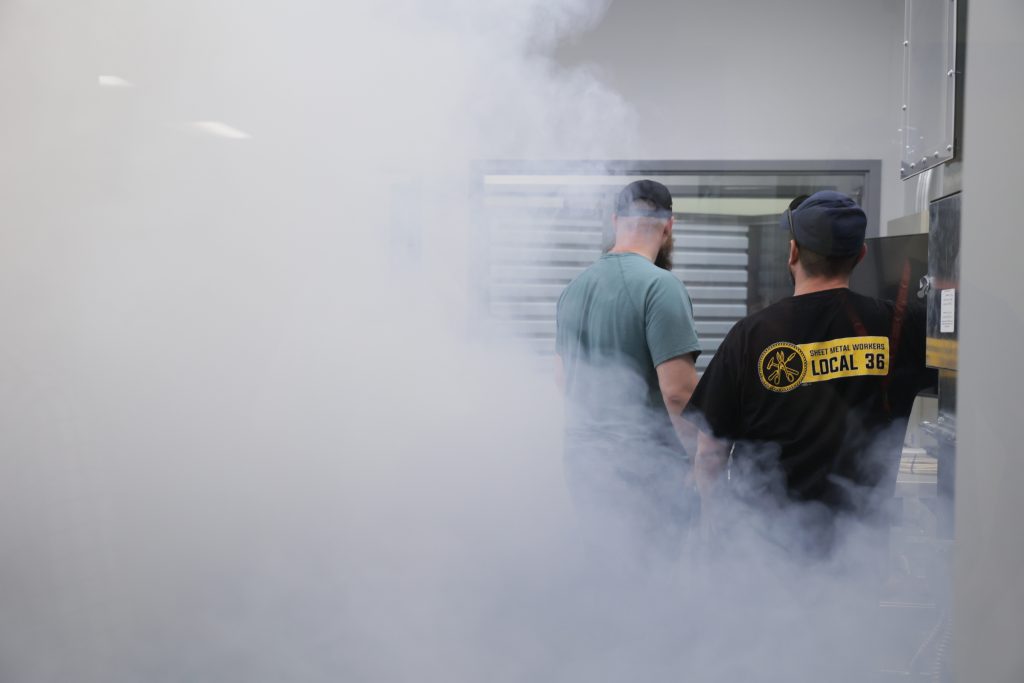
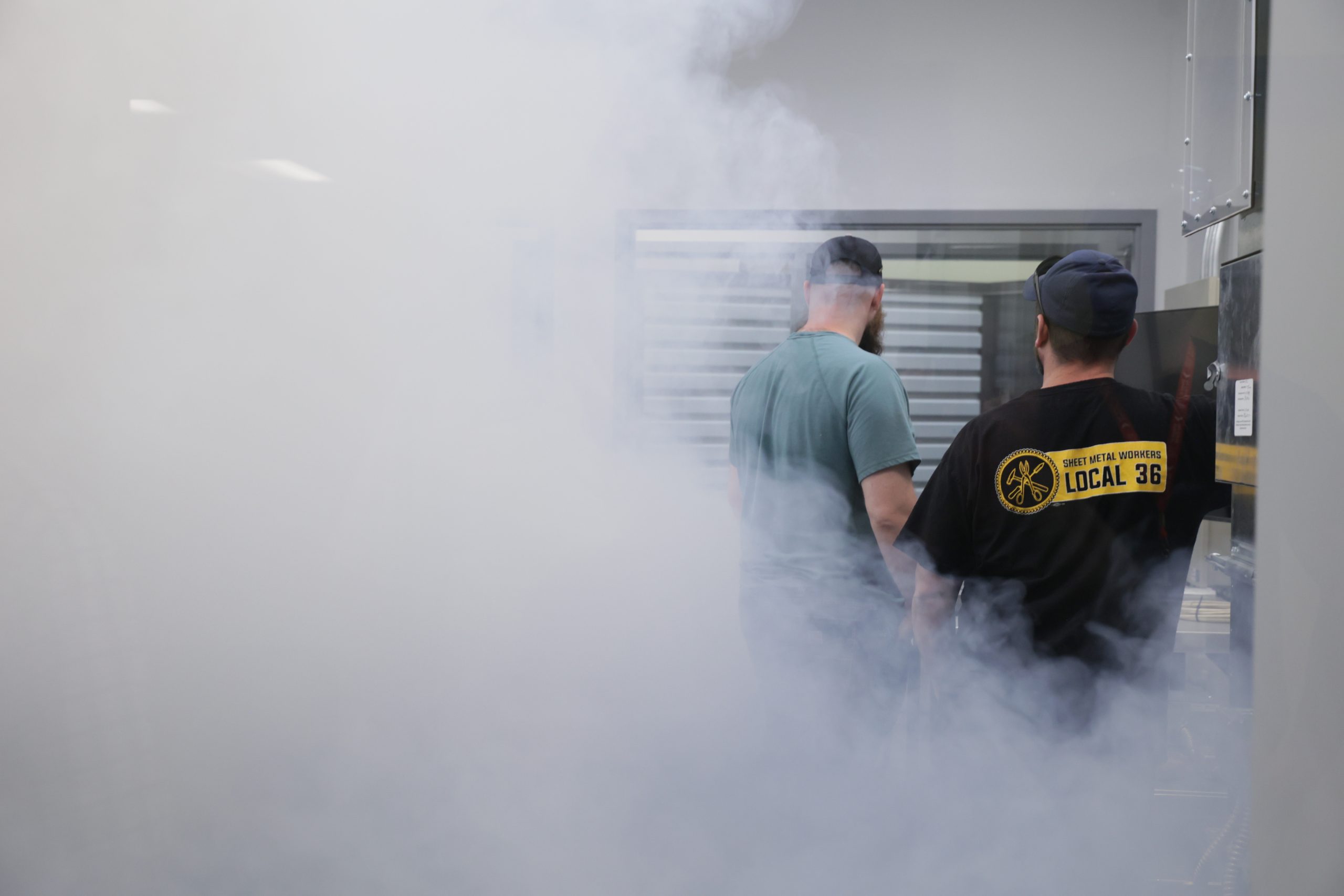
The years leading up to the June 6 signing of the fire code amendment were filled with educational opportunities for local fire professionals to learn about dampers from the design and installation side, to better understand the whole picture. Inside Local 36’s training center, a two-story commercial building mock-up was constructed, allowing instructors to fill a room with theatrical smoke in order to demonstrate operational smoke damper capabilities. Stairwell pressurization — keeping smoke out of a stairwell to allow building occupants to escape — was also demonstrated. The classes allowed fire professionals to get up close to dampers, see how they worked, examine how they failed and ask questions.
Those who visited the training center’s fire and smoke damper mock-up included the State Fire Marshals of Missouri, the Missouri Association of Fire Protection Districts, the Missouri Association of Building Officials and Inspectors and the Metropolitan Fire Marshals Association. During proceedings, Jason LaChance, Local 36 fire life safety instructor, as well as fire professionals, spoke about the importance of damper inspection in support of the amendment.
In addition to saving lives, the passing of the amendment brings big things to Local 36, West said.
“It will mean hundreds of thousands of work hours if the enforcement is there. It will be a ton of work for our members, and it’s also going to be big for the citizens of St. Louis as well,” he added. “They will know if anything happens in these buildings, everything will work as it should.”
For more information on NEMI, visit the website at nemionline.org.